


13548 Jarrettsville Pike | Phoenix, MD 21131 410.683.0650
  • facebook
  • twitter
  • youtube
  • pinterest
  • rss

Author Archive

How to Tell if a Chimney Needs Repair or Replacement

Friday, January 18th, 2019
How to Tell if a Chimney Needs Repair or Replacement

You may not spend a lot of time thinking about your chimney.

You may not spend a lot of time thinking about your chimney. Even if you do, the average homeowner doesn’t know a lot about chimneys, how they’re built, or when they fail. But if a chimney does fail or deteriorate, it can be a huge safety issue. A failing chimney is a fire risk. So how can you know if it is time to get your chimney repaired, or even replaced if it is needed? Here are some signs that you can be on the lookout for so you know when to call in the professionals. (more…)

What Tools and Materials Are Used For Masonry Repairs?

Friday, January 11th, 2019
What Tools and Materials Are Used For Masonry Repairs?

One good way to prepare for the care and maintenance of your own masonry structures is to familiarize yourself with the tools and materials that are commonly used for masonry repairs.

One of the things that makes masonry so special is the simplicity of the materials used to make strong and beautiful structures. Masonry represents the background of many construction projects, so the stone and construction methods need to ensure a strong, durable structure for years to come. One good way to prepare for the care and maintenance of your own masonry structures is to familiarize yourself with the tools and materials that are commonly used for masonry repairs. Read on for our useful guide to masonry repair materials and tools. (more…)

Using Natural Stone in New Construction

Friday, January 4th, 2019
Using Natural Stone in New Construction

The possibilities are endless when using natural stone in your new construction project.

There are many options available when it comes to choosing building materials for your new construction. They each come with their own set of pros and cons. Natural stone is one that has a list of pros that far outweigh the cons. Some people see this material as being heavy and inflexible, but the opposite is true. The possibilities are endless when using natural stone in your new construction project.   (more…)

Common Types of Masonry Repair

Friday, December 21st, 2018
Common Types of Masonry Repair

Read on to learn more about some common types of masonry repair.

Although masonry is known for its strength, longevity, and structural integrity it does require professional maintenance and inspection. Masonry structures are known for their stately beauty and require regular maintenance and repair. Read on to learn more about some common types of masonry repair.   (more…)

The Dangers of Moisture Accumulation in Your Masonry Structure

Friday, December 14th, 2018

Moisture accumulation can cause serious damage to your masonry structure if the problem isn’t fixed!

Masonry structures are durable and resistant to many common types of natural deterioration, making masonry materials a great choice for strong, long-standing structures. However, moisture accumulation can cause a number of problems in the best structure if it is not properly maintained. Water can penetrate your masonry structure many ways, including through drainage issues or water vapor condensation. This can cause serious damage if left unchecked, so it’s important to stay on top of moisture accumulation. Here are a few issues that can result from moisture accumulation in your masonry structure.

Loss of Appeal

One of the most telling signs of damage from moisture accumulation in a masonry structure is the aesthetic deterioration. For example, when moisture accumulates in masonry materials, it can leave behind mineral deposits when the moisture evaporates. For many masonry structures, this can mean a white crystalline deposit seen on the outside of the stone, called efflorescence. Efflorescence is a sure sign that there is a moisture accumulation issue in your structure, and it can seriously degrade the naturally beautiful look of your masonry structure.

Structural Problems

Moisture buildup can cause the same kinds of damage to structural integrity with masonry structures as it does with other materials. When moisture penetrates your materials, it can freeze or leave mineral deposits that can weaken the structure and cause cracking and crumbling. Depending on the type of structure or masonry walls you have, stubborn excessive moisture can also deteriorate your insulation and even stain interior materials. It’s important to stay on top of moisture accumulation in your structure to avoid large-scale costly water damage or even outright wall collapse that can occur if these issues are left untreated.

Health and Safety Issues

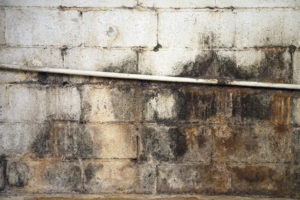
Moisture accumulation is associated with a number of health and safety concerns. Similar to other types of material, masonry structures can be subject to mold and mildew growth due to excessive moisture. This can impact hygiene and even cause health issues in a home if left unaddressed. Bacteria that grow in these environments can negatively impact air quality, sending spores or pollutants into the air that can impact respiratory health and cause nasty odors. By preventing moisture accumulation in your masonry structure, you can keep your property sanitary and avoid serious health issues.

Contact Del Prete Masonry Today!

Whether you are ready to start your next masonry project or are still hesitant and have questions, Del Prete Masonry is here to help. We have the experience and expertise to get it right the first time. Questions? Want to visit some of our residential or commercial projects? Ready to set up a consultation? Feel free to give us a call at 410-683-0650 or visit us online. We are happy to serve Baltimore City and County, Harford County, Carroll County, Anne Arundel County, and Howard County. To see examples of our work and to keep up with our new and exciting projects, be sure to Facebook, Twitter, Google+, and Pinterest


The Four Types of Mortar

Friday, December 7th, 2018
How to Hire the Best Masonry Contractor

Mortar is a very important material in masonry construction because it’s what holds everything together!

When it comes to masonry, mortar may be the most essential part of the construction. Mortar is what is used to bond the materials of your masonry together, providing the structural integrity of the project. Depending on the type of project you are working on, different types of mortar can be used. Each class is best matched with a different kind of construction due to the differences in performance. Depending on your application you may want to use one over another, which is why knowing the differences is so important. There are four primary mortar types M, O, N, and S; today we’ll take you through what each is and where it is best used.

M

With the highest starting psi, type M mortar also uses the largest levels of Portland cement. Type M is most often used for driveways, foundations, retaining walls, and natural stone. Despite its extreme strength, it has poor sealing and adhesion properties which make it ill-suited for most applications where it would be exposed.

O

With only around 350 psi, type O mortar has the lowest compression strength of modern mortar, but it still is incredibly useful. Its primary function is for use in above-grade, non-load-bearing walls, and interiors. It’s particularly valuable for repair and repointing work on other structures thanks to its easy application and consistency.   

N

If you’re working on above-grade walls and exteriors that will be exposed to high temperatures and severe weather, this type of mortar is highly recommended. It is considered to be an all-purpose mix that offers medium compression strength and great general application. It is regarded as the most commonly used mortar for home-owners and has a 750 pound per square-inch strength after 28 days. Type N is made from a mix of lime, Portland cement, and sand. It’s the preferred type for soft stone masonry and is useful for interior load bearing, exterior, and above grade installations.  

S

With a high strength level, weighing in at 1,800 psi and a high-tensile bond, S mortar is a perfect fit for a variety of projects including those at or below grade. It is often used for retaining walls, sewers, manholes, and masonry foundations in below grade projects. It is also an excellent choice for masonry structures like walkways and brick patios. Although it already is able to withstand seismic loads, wind and soil pressure, it can be mixed to achieve an even higher psi level.


Contact Del Prete Masonry Today for Your Next Construction Project!

If you are ready to upgrade your home or commercial building with professional masonry installation or replacement, Del Prete Masonry has the experience and expertise to get the job done right for the right price. To explore our residential and commercial services and set up a consultation, please give us a call at 410-683-0650 or contact us online. We currently serve Baltimore City and County, Harford County, Carroll County, Anne Arundel County, and Howard County. To see examples of our work and get more updates, follow us on Facebook, Twitter, Google+, and Pinterest.


4 Ways to Demolish a Building

Friday, November 30th, 2018

A high reach arm is used to demolish masonry structures and taller buildings from the top down.

When we think of building demolition, we often just think of a huge wrecking ball knocking down a building. While this is one of the methods that can be used, there are actually a variety of options when it comes to demolishing a building. The method that construction workers will use depends on factors such as location, building materials, and the purpose of the demolition. Here are four ways to demolish a building.

Implosion

This method of demolition is most often used for large buildings and structures that are in urban areas. It is the most dramatic method because it uses explosives to blow up a building’s vertical support structures, causing it to collapse from the inside out. In order for implosion to be successful, the demolition crew must closely analyze the structural blueprints of a building to figure out where the main structural supports are located.

High Reach Arm

With this demolition method,  a base machine is used that an arm is then attached to. A demolition tool such as shears, a crusher, or a hammer are attached to the end of the arm. A high reach arm demolishes the building from the top down, removing large pieces of the building at a time. The crew then breaks those pieces down and disposes of them. High reach arms are used for masonry structures and taller buildings.

Wrecking Ball

Using a wrecking ball is the oldest and most common method of demolition. It is mostly used to demolish concrete structures, but can be used for other types of masonry structures as well. Wrecking balls can weigh up to 13,5000 pounds and are suspended from a crane. The ball can either be swung into the structure or dropped onto it. This requires a very skilled and experienced crane operator because of the size and weight of the wrecking ball.

Selective Demolition

Selective demolition is a newer demolition method and is rapidly increasing in popularity. This is because construction workers have the option to reuse or recycle some of the building’s materials. The goal of this method is to preserve as many reusable and recyclable materials as possible, making it a more costly and time consuming option.

Contact Del Prete Masonry Today for Your Demolition Needs!

If you are ready to upgrade your home or commercial building with professional masonry installation or replacement, Del Prete Masonry has the experience and expertise to get the job done right for the right price. To explore our residential and commercial services and set up a consultation, please give us a call at 410-683-0650 or contact us online. We currently serve Baltimore City and County, Harford County, Carroll County, Anne Arundel County, and Howard County. To see examples of our work and get more updates, follow us on Facebook, Twitter, Google+, and Pinterest.

4 Common Types of Masonry Materials

Friday, November 16th, 2018

Stone is one of the more expensive masonry materials, known for its timeless look and durability!

Masonry is the act of building and constructing with the use of stone materials. These masonry materials serve as the backbone of many crucial constructions such as buildings, walls, and various pieces of hardscaping.  What masonry materials are the most commonly used and best ones to use for masonry projects? Here are four of the most common types of masonry materials.  

Stone

If you are looking for more aesthetically pleasing masonry materials, then stone may be exactly what you need. Stone is a classic, timeless look for masonry materials, which makes it perfect if you desire stylish masonry materials for your project. It is also a durable, low maintenance material to work with after your project is done. It is damage-resistant which helps with its great durability.

Concrete

Concrete is one of the most common types of masonry materials you will find. For starters, it is among the cheaper masonry materials to work with, which makes it desirable for bigger projects. Concrete also carries with it a high insulation factor, which can help cut the utility costs for the building it is used for. It is also made more common due to the fact that it allows for construction to go along faster that other masonry materials.

Stucco

Much like stone, stucco is one of the most highly durable masonry materials. Its high damage resistance will allow for it to last for a considerable amount of time without worry. However, stucco is not without its drawbacks. There are concerns for stucco that other masonry materials do not need to worry about. For example, there is the concern that moisture could accumulate on downward slopes in the stone. Additionally, construction can very easily get messy when dealing with stucco.

Brick

Brick is another common masonry material that is often found amongst masonry projects. Brick has always been preferred to other masonry materials for well suited reasons. It is a special type of masonry material considering that it has been used for centuries without ever really disappearing. This is partly because it is both wind and fire resistant, as well as controls moisture quite well. It is low maintenance, but it should be noted that when repairs are needed, they can be costly. Their weight can also place quite a bit of stress on the structures they are used for, which you should keep an eye out for.

Contact Del Prete Masonry Today for Your Construction Project!

If you are ready to upgrade your home or commercial building with professional masonry installation or replacement, Del Prete Masonry has the experience and expertise to get the job done right for the right price. To explore our residential and commercial services and set up a consultation, please give us a call at 410-683-0650 or contact us online. We currently serve Baltimore City and County, Harford County, Carroll County, Anne Arundel County, and Howard County. To see examples of our work and get more updates, follow us on FacebookTwitterGoogle+, and Pinterest.


The Top 4 Signs of Brick Masonry Problems

Friday, November 9th, 2018

Vertical cracks are one of the more minor brick masonry problems, but if left unfixed, they can lead to bowed bricks and damage to the inner wall.

Brick masonry buildings and structures are made to last for years at a time. However, just like any other materials, your brick masonry will begin to wear and tear over time, especially if the proper care isn’t implemented. You want to fix any masonry problems you have as soon as possible to prevent them from getting any worse. Here are the top four signs of brick masonry problems.

Bowed Brick

Also known as bulging brick, this is when the bricks in your wall are either caving in or jutting out in certain areas. This occurs because of moisture that has accumulated behind the brick. The moisture can warp the bricks, forcing them to push out or soften the wood behind the brick, causing them to cave in.

Vertical Cracks

This is a common type of wall crack that occurs because of natural expansion of your brick masonry. With vertical cracks, you don’t have to worry about your building’s foundation being majorly affected. However, vertical cracks still allow water in, so it could lead to bowed bricks or damage to the inner wall if it’s left unfixed.

Compacted Bricks

A compacted brick is one of the easiest signs to spot because the shape of the brick will be different than normal. Compacted bricks open a hole in the wall, allowing water to get through. They also will damage more bricks over time because it can’t provide sufficient pressure to the bricks next to it to keep them in place.

Spalling

If brick masonry begins spalling, this means that the face of the brick is chipping. This is caused by corrosion to the shelf angle that sits behind the brick. The shelf angle is a metal piece that is installed behind a row of bricks in order to distribute the weight of the bricks evenly between the ground and the building. If the angle shelf corrodes, it can lose its strength and cause the weight distribution to become uneven, which can potentially be very dangerous.


Contact Del Prete Masonry Today for Your Brick Masonry Repairs!

Whether you are ready to start your next masonry project or are still hesitant and have questions, Del Prete Masonry is here to help. We have the experience and expertise to get it right the first time. Questions? Want to visit some of our residential or commercial projects? Ready to set up a consultation? Feel free to give us a call at 410-683-0650 or visit us online. We are happy to serve Baltimore City and County, Harford County, Carroll County, Anne Arundel County, and Howard County. To see examples of our work and to keep up with our new and exciting projects, be sure to Facebook, Twitter, Google+, and Pinterest.

Tips for Increasing the Lifespan of Your Brick Masonry

Friday, November 2nd, 2018
Tips for Increasing the Lifespan of Your Brick Masonry

You might be surprised to learn that bricks can be subject to water damage.

Brick masonry is a beautiful and durable method to use for any project. While brick is very long lasting, there are still maintenance and repair concerns you must take into account. By following these four simple tips, you can ensure that your brick will have the longest possible lifespan. (more…)