



When is masonry demolition necessary? The experts at DelPrete Masonry can help you understand when this step is needed.
When commercial buildings age, undergo extensive damage, or experience structural shifts, business owners are often faced with a critical question: when is masonry demolition necessary instead of repair? While restoration is almost always the first choice—preserving materials, reducing waste, and maintaining architectural character—there are scenarios where demolition is the safest, most cost-effective path.
Experienced masons at DelPrete Masonry understand the signs, the risks, and the strategies involved when demolition can’t be avoided. Here’s what they want property owners to know.
Structural Failure Beyond Repair
One of the clearest indicators of when masonry demolition is necessary is structural instability that cannot be corrected with reinforcement or restoration. Common causes include:
- Deep foundation settlement
- Severe bowing or bulging walls
- Major cracking that penetrates through the full masonry depth
- Load-bearing failure
- Water infiltration that has compromised the wall’s integrity
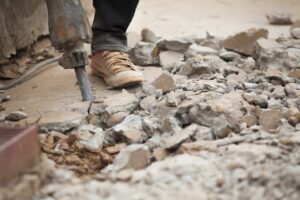
When a structure can no longer safely support itself—or the people inside it—controlled demolition is the only responsible choice.
Lesson from the pros: Before demolition is approved, masons and structural engineers work together to assess load paths, evaluate salvageable components, and confirm that repair is no longer viable.
Extensive Water or Freeze–Thaw Damage
Water is one of masonry’s worst enemies—especially in climates with harsh winters. Over time, repeated freeze–thaw cycles expand cracks, erode mortar joints, and destabilize brick, stone, or concrete units.
Demolition may be required when:
- Materials crumble or turn powdery
- Walls become saturated beyond repair
- Mold or moisture damage spreads throughout the structure
- Mortar joints deteriorate to the point of widespread failure
Lesson from the pros: Even when some sections require demolition, skilled masons often preserve untouched portions, integrating new materials seamlessly with the existing structure.
Unsafe or Outdated Construction
Older buildings sometimes contain:
- Substandard materials
- Inadequate reinforcement
- Outdated construction methods
- Unpermitted additions or modifications
In these cases, masonry demolition is necessary to eliminate unsafe conditions and bring the property up to modern building codes.
Lesson from the pros: Selective, or “surgical,” demolition allows unsafe areas to be removed while preserving historically significant features or structurally sound elements.
Preparing for a Renovation or Expansion
Some commercial renovations simply require a clean slate. Masonry demolition may be the best option when property owners want to:
- Expand or relocate building entrances
- Install larger windows or curtain wall systems
- Remove outdated facades
- Improve accessibility transitions
- Reconfigure floor plans
Lesson from the pros: Masons plan demolition carefully to avoid damaging structural components that will remain part of the renovation.
Brick or Stone Units That Cannot Be Restored
While many materials can be salvaged during restoration, some are too damaged to be safely reused. This includes:
- Severely spalled bricks
- Broken or delaminated stone
- Concrete block that has lost its structural core
- Masonry weakened by chemical exposure or fire
Once materials lose their structural capability, demolition ensures the safety and long-term performance of the building.
Lesson from the pros: Professionals evaluate whether full demolition is required or if partial removal can support a phased, cost-effective restoration plan.
Hazardous Material Remediation
Certain older buildings contain hazardous materials—like embedded asbestos or lead—that make demolition the only practical option.
Demolition helps completely remove hazardous components and allows new, compliant materials to replace them.
Lesson from the pros: Experienced masons coordinate with licensed abatement teams to ensure the demolition is performed safely and legally.
Why Professional Expertise Matters
Masonry demolition is never a decision to take lightly. The process involves:
- Engineering assessments
- Specialized equipment
- Careful control of debris
- Structural safety planning
- Preservation opportunities
Professional masons know when masonry demolition is necessary and how to execute it without causing damage to adjacent structures or compromising future construction plans.
If you need help determining whether repair or demolition is right for your structure, experienced masonry professionals can evaluate your building and guide you toward the best solution.
CONTACT DEL PRETE MASONRY TODAY!
Whether you are ready to start your next masonry project or are still hesitant and have questions, Del Prete Masonry is here to help. We have the experience and expertise to get it right the first time. Questions? Want to visit some of our residential or commercial projects? Ready to set up a consultation? Feel free to give us a call at 410-683-0650 or visit us online. We are happy to serve Baltimore City and County, Harford County, Carroll County, Anne Arundel County, and Howard County. To see examples of our work and to keep up with our new and exciting projects, be sure to follow us on Facebook, Twitter, and Pinterest.
Tags: demolition, masonry demolition, Masonry repair, selective demolition